


Written By Sam Henselijn
Launching or scaling a private label snack program requires more than finding a factory that can fill bags. The right partner should understand sourcing, packaging, retail requirements, food safety standards, and long term scalability.
In 2026, retailers and brands expect higher compliance, tighter margins, and faster turnaround times. Choosing the wrong private label snack partner can lead to costly delays, quality inconsistencies, and missed distribution opportunities.
Here is what to look for when selecting a private label snack sourcing and co packing partner.
Clear Positioning: Manufacturer vs. Sourcing & Co Packing Partner
Not all partners operate the same way.
Some companies manufacture raw ingredients. Others specialize in sourcing finished ingredients and providing private label co packing and packaging services.
A sourcing and co packing partner focuses on:
- Ingredient procurement from vetted suppliers
- Retail ready packaging formats
- Automation for scale
- Compliance documentation
- Inventory coordination
- Production scheduling
If you are launching a snack brand or expanding into retail, you need a partner that understands the full supply chain, not just production.
Learn more about how structured private label programs work here:
https://wholesale.lorentanuts.com/private-label-snack-solutions
Food Safety and Certification Standards
Retailers increasingly require documented food safety programs. At minimum, your partner should operate under a recognized certification such as SQF.
Ask:
- What level of certification do they hold?
- How frequently are audits performed?
- Are audits announced and unannounced?
- What is their historical audit performance?
Food safety documentation should not be an afterthought. It should be built into the workflow from sourcing through final packaging
Private label manufacturing allows businesses to enter the snack market quickly without the massive capital investment required to build and operate their own facility.
Packaging and Automation Capabilities
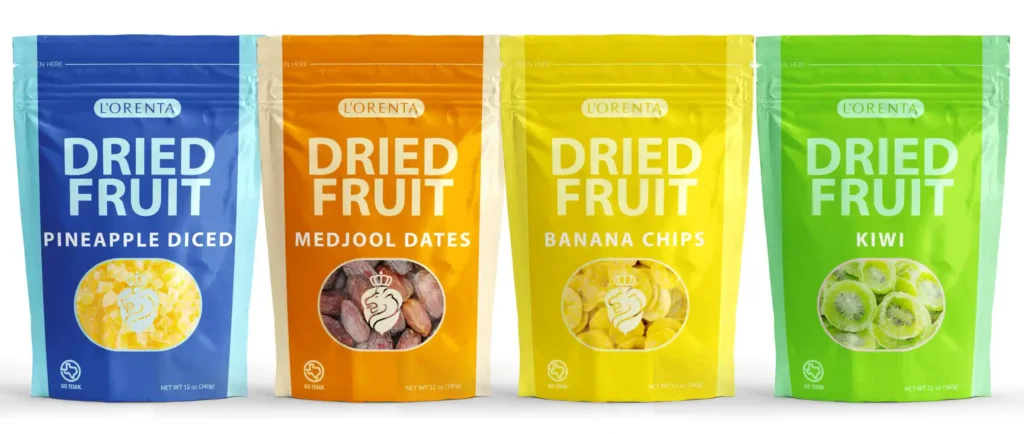
Modern private label snack programs require flexible packaging options and scalable automation.
A strong partner should offer:
- Stand up pouches
- Pillow bags
- Club store trays
- Multi pack configurations
- Retail ready case packing
Automation matters because it ensures consistency, repeatability, and efficiency at higher volumes.
You can see examples of structured packaging and automation programs here:
https://wholesale.lorentanuts.com/packaging-and-automation-capabilities
Scalability and Volume Flexibility
One of the biggest mistakes brands make is choosing a partner that can handle today’s volume but not tomorrow’s growth.
Ask these questions:
- What is your current production capacity?
- What is your maximum output?
- Can you scale quickly for seasonal spikes?
- How do you handle national distribution rollouts?
Growth should not require switching partners.
Process Transparency
A structured private label partner should clearly outline their process from initial concept to retail ready product.
Typical stages include:
- Product selection and sourcing
- Pricing and margin modeling
- Packaging selection
- Compliance documentation
- Production scheduling
- Quality control checks
- Distribution coordination
A documented, repeatable process reduces risk and increases speed to market.
For a breakdown of how a full program typically works, review:
https://wholesale.lorentanuts.com/our-private-label-process
Category Expertise
Different snack categories require different sourcing strategies and packaging approaches.
For example:
Candy co packing programs often focus on:
- Flavor consistency
- Moisture control
- Seasonal rotations
Nut programs require:
- Lot tracking
- Freshness control
- Allergen management
Snack mixes require:
- Component sourcing coordination
- Weight accuracy
- Blend consistency
A partner with multi category experience can help structure the right program for your product mix.
Explore category specific programs here:
Candy programs:
https://wholesale.lorentanuts.com/private-label-candy-co-packing
Nut programs:
https://wholesale.lorentanuts.com/private-label-nuts-co-packing
Snack mix programs:
https://wholesale.lorentanuts.com/private-label-snack-mixes
Retail Readiness and Compliance
Large retailers have strict packaging and pallet requirements.
Your partner should understand:
- Case pack standards
- Barcode placement
- Pallet configurations
- Labeling compliance
- Shelf ready presentation
Retail readiness is not something you fix at the end. It must be built into the plan from the beginning.
Long Term Partnership Mindset
The strongest private label programs are built on partnership, not transactional production.
Look for a partner that:
- Communicates clearly
- Provides documentation proactively
- Plans for growth
- Maintains consistency
- Understands margin structure
Private label success is built over years, not single purchase orders.
Common Mistakes to Avoid
- Choosing based on lowest price only
- Ignoring food safety documentation
- Overlooking packaging automation
- Failing to plan for growth
- Not clarifying process expectations
The wrong partner can slow your launch timeline and damage retailer relationships. Learn more about our wholesale, private label and branded capabilities.
Food Safety, Certifications, and Compliance
Food safety is one of the most important considerations when choosing a private label snack manufacturer. L’Orenta Nuts operates under SQF, HACCP, GMP, and FDA-certified food safety programs and utilizes metal detectors, checkweighers, and automated systems throughout production to ensure consistent quality, accuracy, and consumer safety at every stage.
L’Orenta Nuts proudly holds the SQF food safety certification, symbolizing our unwavering dedication to upholding the highest standards of food safety and quality. This certification guarantees that our products undergo rigorous scrutiny, ensuring transparency, traceability, and adherence to global food safety regulations for the utmost consumer confidence.
L’Orenta Nuts maintains HACCP (Hazard Analysis and Critical Control Points) certification, a preventive food safety system focused on identifying, evaluating, and controlling potential hazards throughout production. This approach ensures consistent process control, risk reduction, and compliance with food safety standards that protect product integrity and consumers.
L’Orenta Nuts operates under Good Manufacturing Practices (GMP) certification, ensuring our facility follows strict quality and sanitation standards throughout production. These practices promote consistent processes, product integrity, and full compliance with regulatory requirements to deliver safe, high-quality food products.
L’Orenta operates as an FDA registered manufacturing facility, meeting the regulatory requirements set by the U.S. Food and Drug Administration. This registration confirms compliance with federal food safety regulations and supports the consistent production of safe, high quality food products.

Sam Henselijn Author’s Biography – Meet L’Orenta Nuts CEO
Copyright 2026 L’Orenta Nuts


